Class IV Laser Therapy
Laser therapy, also known as Photobiomodulation (PBM), has become a cornerstone of regenerative medicine and pain management in veterinary clinics. It involves using specific wavelengths of light to stimulate cellular regeneration and increase blood circulation.
How It Works: The Science of Photobiomodulation
When the laser’s light energy penetrates the tissue, it interacts with the mitochondria in the animal’s cells. This process triggers several biological responses:
-
ATP Production: It boosts the production of Adenosine Triphosphate (ATP), which acts as “fuel” for cells to repair themselves faster.
-
Vasodilation: It opens up blood vessels and activates the lymphatic drainage system, which reduces swelling (edema).
-
Endorphin Release: The therapy encourages the release of the body’s natural pain-killing hormones.
Key Clinical Applications
| Category | Common Conditions Treated |
| Chronic Pain | Osteoarthritis, hip dysplasia, and intervertebral disc disease (IVDD). |
| Wound Healing | Post-surgical incisions, hot spots, lick granulomas, and bite wounds. |
| Inflammation | Otitis (ear infections), gingivitis/stomatitis (common in cats), and anal gland inflammation. |
| Acute Injuries | Sprains, strains, and tendonitis. |
What to Expect During a Treatment
The process is non-invasive and often very relaxing for the animal.
-
Duration: Most sessions last between 5 to 15 minutes, depending on the size of the area being treated and the power of the laser.
-
Sensation: Pets generally feel a gentle, soothing warmth. Many dogs will relax or even fall asleep during the procedure.
-
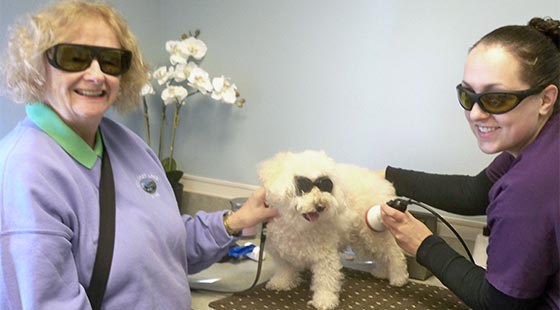
Safety: Both the technician and the pet must wear protective eyewear to prevent retinal damage from the laser beam.
-
Frequency: For chronic issues like arthritis, a “loading dose” is usually recommended, followed by a maintenance schedule every few weeks.


